


.svg)
Not all tile performs equally in a bathroom. King County's humidity, limited natural light for much of the year, and the constant moisture that comes with a Pacific Northwest home all put real demands on your walls. The best wall tile for your bathroom has to do more than look good. It has to hold up to steam, resist mold in the grout lines, and still feel warm and inviting every time you walk in. This guide breaks down your options by wall location, so you can match the right tile to the right spot.
What Is the Best Tile for Bathroom Walls in a Pacific Northwest Home?
For most Bothell bathrooms, porcelain is the top performer for bathroom wall tile, especially inside the shower. Porcelain has very low porosity, which means it absorbs almost no water, so it resists the humidity cycles that a PNW bathroom deals with all year. Ceramic works well too, but it is better suited to drier walls outside the direct spray zone.
So why does location matter so much when picking bathroom wall tile? A wall that gets soaked daily needs different performance than a wall that only sees ambient steam. That is really the core decision behind every conversation about bathroom tile ideas Solid Kitchen and Bath have with Bothell homeowners.
💡 Pro Tip: If you are only replacing one section of tile, start with the shower walls first. That is the zone doing the most work against moisture.
Shower Walls, Shower Floor vs. Dry Bathroom Walls: Why Location Changes Your Tile Choice
Your bathroom actually has three distinct wall zones, and each one has different needs. Shower walls face constant water and steam. Walls outside the wet zone deal mostly with humidity and splashes. A vanity backsplash mostly needs to resist toothpaste and water spots.
Shower walls (where waterproofing matters most):
- Needs a low-porosity material like porcelain or glazed ceramic
- Slip resistance matters less here since it is a vertical surface, but grout quality matters a lot
- This is not the place to save money on materials
Bathroom walls outside the wet zone (where looks take priority):
- More flexibility for natural stone, glass accents, or ceramic
- Aesthetics and bathroom tile ideas can take the lead over pure performance
- Great place to introduce a bold pattern or warm-neutral color
Vanity backsplash:
- A smaller, low-stakes place to experiment with glass tile or a mosaic accent
- Easy to update later without a full remodel
Bathroom Wall Tile Options at a Glance
Here is a quick side by side look at the five most common bathroom wall tile options for Pacific Northwest homes.
Looking at this table, a pattern shows up quickly. The materials that perform best in high-moisture areas, porcelain and large-format tile, also happen to need the least ongoing maintenance. Natural stone and glass sit at the other end of that scale. They look beautiful, but they ask more of you over time in the form of sealing, careful grout cleaning, or both. Keeping this tradeoff in mind early makes the rest of your bathroom tile ideas much easier to narrow down.
Ceramic vs Porcelain Wall Tile Bathroom: Which One Wins for Bothell Homes?
Both ceramic and porcelain are popular choices for the best tiles for bathroom walls, but they serve different purposes:
- Porcelain tiles handle moisture and frost cycles better, making them the professional standard for Bothell shower walls.
- Ceramic tiles are more affordable and work well on walls that do not get direct water exposure.
- If budget is tight and the wall is outside the shower, ceramic is a smart, cost-effective option.
- For shower walls, porcelain is worth the extra investment for its durability and moisture resistance.
Ultimately, the choice depends on your bathroom zone and budget considerations.

Natural Stone Bathroom Walls: Beautiful, But Is It Right for Seattle's Climate?
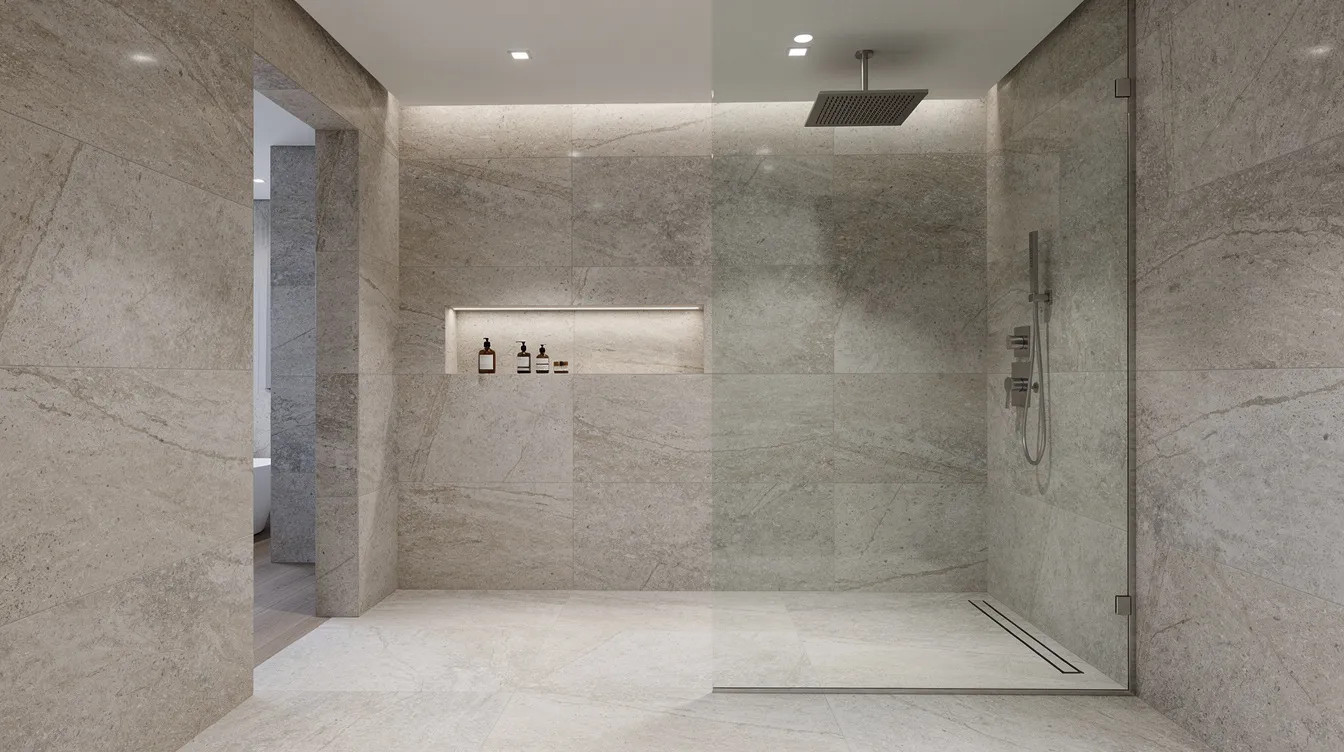
Natural stone, including marble, travertine tile, and slate, adds a genuinely luxurious look to a bathroom. It also requires regular sealing to hold up over time, generally every 6 to 12 months in a wet area like a shower. In Seattle's damp climate, unsealed natural stone can develop mold in the grout lines within just a couple of years.
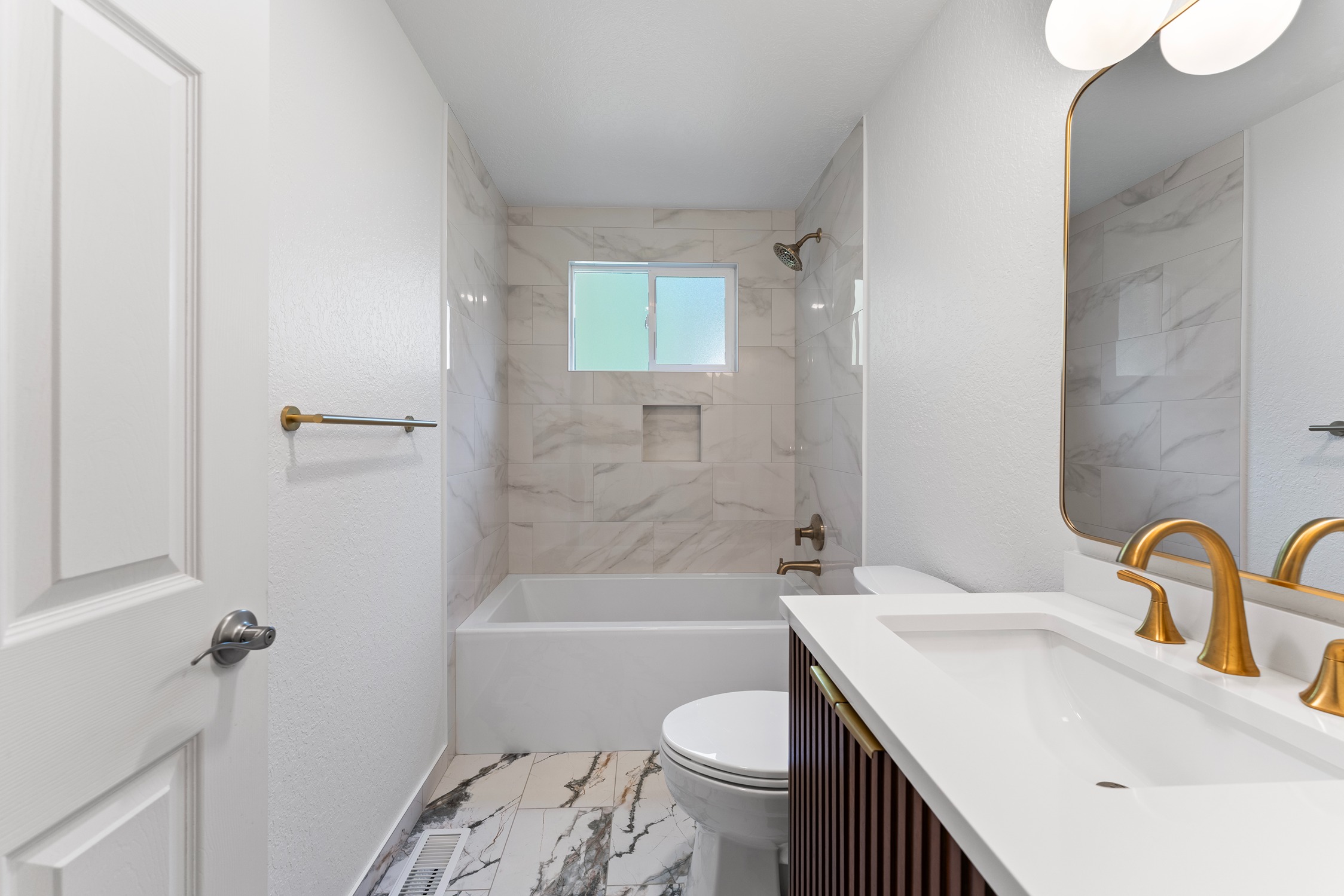
Marble-look porcelain has become a popular workaround. It gives you the visual richness of natural stone without the ongoing sealing schedule. If you love the look of travertine tile but do not want to think about resealing every year, a porcelain version delivers a similar warm, textured feel with far less upkeep.
Large-Format Tile Shower Walls: Why Bigger Tiles Make Small Bathrooms Feel Bigger
Large-format tile, generally 12 by 24 inches or larger, has become one of the most requested shower tile ideas for small bathroom projects in Bothell. Fewer grout lines mean fewer visual interruptions, and fewer interruptions make a small bathroom read as larger than it actually is.
Large-format tile for shower floor use works a little differently than wall applications, since floor tile needs enough texture for slip resistance. On walls, though, large-format tile is mostly upside. It cuts down on grout maintenance and gives the whole shower a cleaner, more modern look.
If you are exploring shower tile ideas for small bathroom layouts, our post on making a small bathroom feel larger with tile covers more layout-specific tips beyond just wall tile.
Choosing Bathroom Wall Tile Zone by Zone
Instead of picking one tile for the whole room, walk through your bathroom zone by zone. This keeps you from overspending on performance you do not need in a dry corner, and it keeps you from undershooting durability where moisture is heaviest. Here is the order that tends to work best.
- Start with the shower. Decide on porcelain or large-format tile shower walls first, since this zone has the strictest performance needs.
- Address the rest of the wet zone. Any wall within splash range of the shower or tub should match or complement your shower tile.
- Move to dry walls. This is where natural stone, glass tile, or a bold accent pattern can shine without a maintenance penalty.
- Finish with the vanity backsplash. Use this small area to tie the whole room together, often with a mosaic or glass accent.
- Confirm your bathroom tile grout choice last. Grout color should be selected after your tile is locked in, not before.
For a full bathroom tile installation in Bothell, our team can walk you through zone-by-zone planning in person, including which of your walls actually need the higher performance materials.
Bathroom Tile Grout: The Detail That Makes or Breaks Your Tile Choice
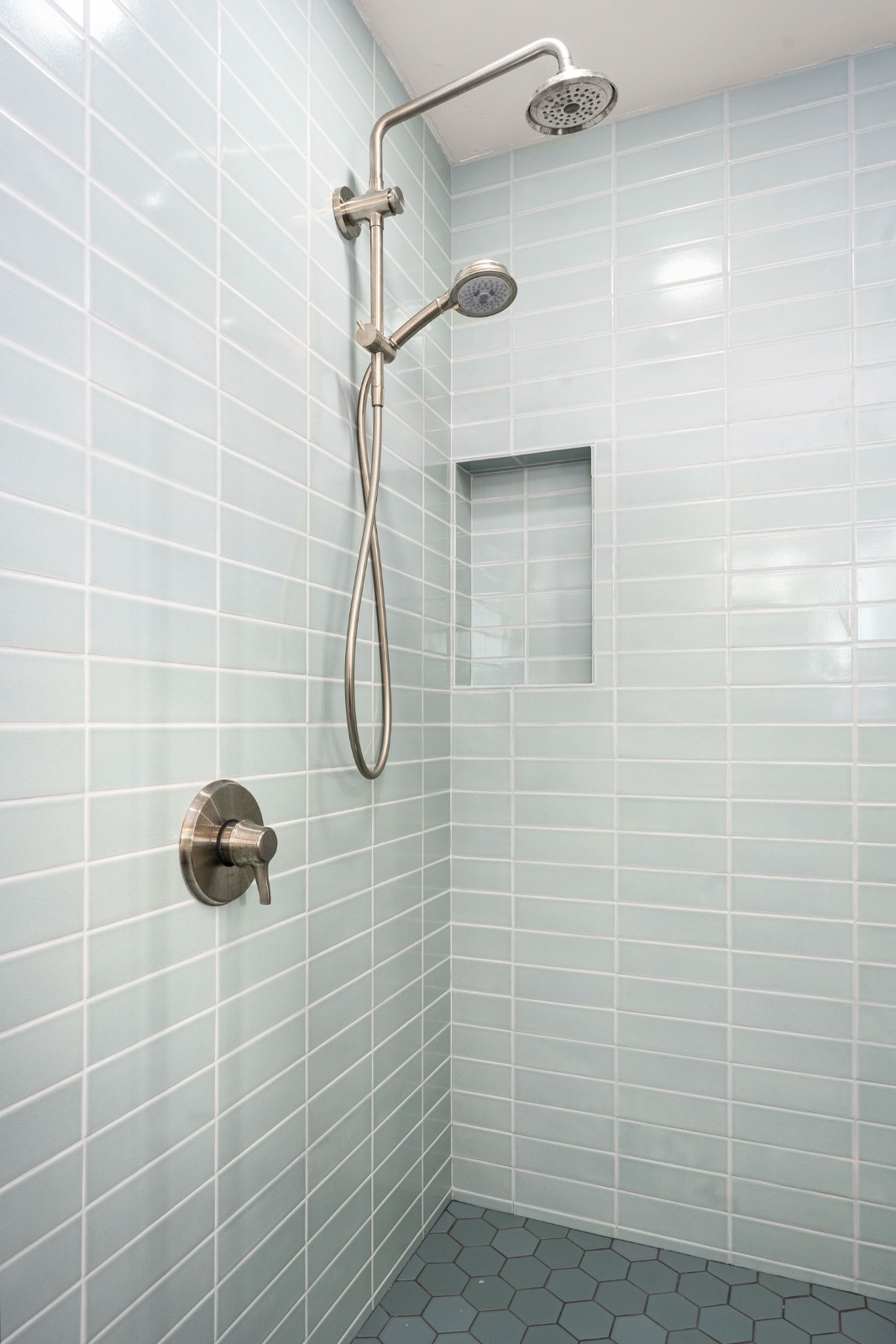
Grout might be the most overlooked part of any bathroom wall tile decision, but proper grout selection can impact both appearance and maintenance for years. Light grout brightens a small space but stains more easily. Dark grout hides everyday grime better but can make a small bathroom feel closed in.
Glossy tile finishes are easier to clean and resist stains, and pairing a glossy finish with a well-sealed grout line cuts down on mold risk significantly. Whatever bathroom wall tile options you land on, do not treat grout as an afterthought. It is doing real protective and visual work.
Maximizing Natural Light With the Right Bathroom Wall Tile
In a Bothell bathroom where natural light is limited from October through March, tile choice actually affects how bright the room feels. Lighter tile colors and larger formats reflect more of the available light and make the space feel more open. Glossy finishes bounce light around a room more than matte or heavily textured surfaces.
Maximizing natural light with tile is less about the window and more about what happens to the light once it enters. Warm-neutral colors are trending right now for exactly this reason. They stay bright without feeling cold or clinical.
This matters most in bathrooms with a single small window or no window at all, which describes a fair number of Bothell primary bathrooms. In those rooms, your bathroom wall tile is doing double duty. It is not just protecting the walls, it is also standing in for the daylight the room does not get. A large-format tile in a soft warm white can make a windowless bathroom feel noticeably brighter than the same room finished in small, dark tile.
Common Mistakes to Avoid When Choosing Bathroom Wall Tile
- Using natural stone in the shower without a sealing plan. It will need resealing on a schedule, not just once.
- Choosing dark grout in a small, low-light bathroom. It can make the space feel smaller than it is.
- Skipping glazed porcelain or ceramic in high-moisture areas. These durable materials exist for a reason.
- Picking glass tile for full shower walls. It looks stunning as an accent but the grout maintenance adds up fast.
- Ignoring how tile size affects a small bathroom. Large-format tile almost always reads larger than lots of small pieces.
💡 Pro Tip: Bring a tile sample home and look at it under your bathroom's actual lighting before you commit. PNW bathroom tile can look completely different under gray daylight than it does under a showroom's bright lights.
Choosing the Right Wall Tile for Your Bothell Bathroom
The best tile for bathroom walls is not one single product. It is the right material matched to the right zone, backed by grout that actually holds up to a Pacific Northwest bathroom's daily moisture.
Porcelain for the shower, ceramic or stone for the dry walls, and large-format tile wherever you want a small bathroom to feel bigger, that combination covers most Bothell homes well.
If you want help mapping out bathroom wall tile options for your own space, request your estimate and Solid Kitchen & Bath will walk through what fits your bathroom, your budget, and Bothell's climate.
FAQs
What is the best tile for bathroom walls in a shower?
Porcelain is generally the best tile for bathroom walls inside a shower because of its low porosity and strong resistance to humidity cycles. Large-format porcelain tile also cuts down on grout lines, which reduces long term maintenance.
Is ceramic or porcelain better for bathroom walls?
Porcelain tile bathroom walls tend to outperform ceramic in high-moisture areas like the shower, since porcelain absorbs less water. Ceramic is a more affordable option that works well on dry walls, powder rooms, or a vanity backsplash.
Does natural stone work well in a Pacific Northwest bathroom?
Natural stone, including travertine tile and marble, can work well but requires sealing roughly every 6 to 12 months in a shower or other wet area. Because Seattle's damp climate creates ideal conditions for moisture, grout lines can develop mold within a couple of years if they aren't sealed regularly.
What size tile makes a small bathroom look bigger?
Large-format tile, generally 12 by 24 inches or larger, reduces the number of grout lines and visual breaks in a room. Fewer interruptions make a small bathroom read as more open and spacious.
How do I choose bathroom tile grout color?
Light grout brightens a room but shows stains more easily over time, while dark grout hides grime but can make a small space feel closed in. Most homeowners choose grout after finalizing their tile, since the two need to work together visually.

.svg%20fill.svg)




.svg)