


.svg)
What Is the Average Kitchen Island Cost?
The national average kitchen island cost sits around $4,800, but that number tells only part of the story. What you actually spend depends heavily on the type of island you choose, the materials you select, and how much work the kitchen island installation involves.
Here is a general breakdown by island type:
At the lower end of the price range, a rolling prefab cart is a flexible, budget-friendly option that works well in smaller kitchens. On the higher end, a fully custom-built kitchen island with custom cabinets, stone countertops, a built-in sink, and seating is a significant investment, but one that adds lasting value to your home.
Most Bothell homeowners doing a mid-range kitchen island project with semi-custom cabinetry and a quality countertop fall somewhere in the $4,000 to $8,000 range.
What Drives the Cost to Install a Kitchen Island?
Understanding what goes into the price helps you make smarter decisions before you commit to anything. How much a kitchen island costs ultimately comes down to these key factors.
Size and Shape
The bigger the island, the more materials and labor hours are needed. A compact 34 ft prep space island is a very different project from a 5x7 ft large island with seating areas on both sides. As a rough benchmark, budget around $200 per square foot for a mid-range build. That number climbs with premium materials or complex shapes like curved edges, which can add 15% to 30% to the total cost.
Countertop Material and Countertop Space
The countertop is often the biggest cost variable in the overall project. Depending on what you choose, it can account for 30% to 75% of your total project budget. The amount of countertop space you want will also affect the price, especially if you are looking to add a breakfast bar or seating.
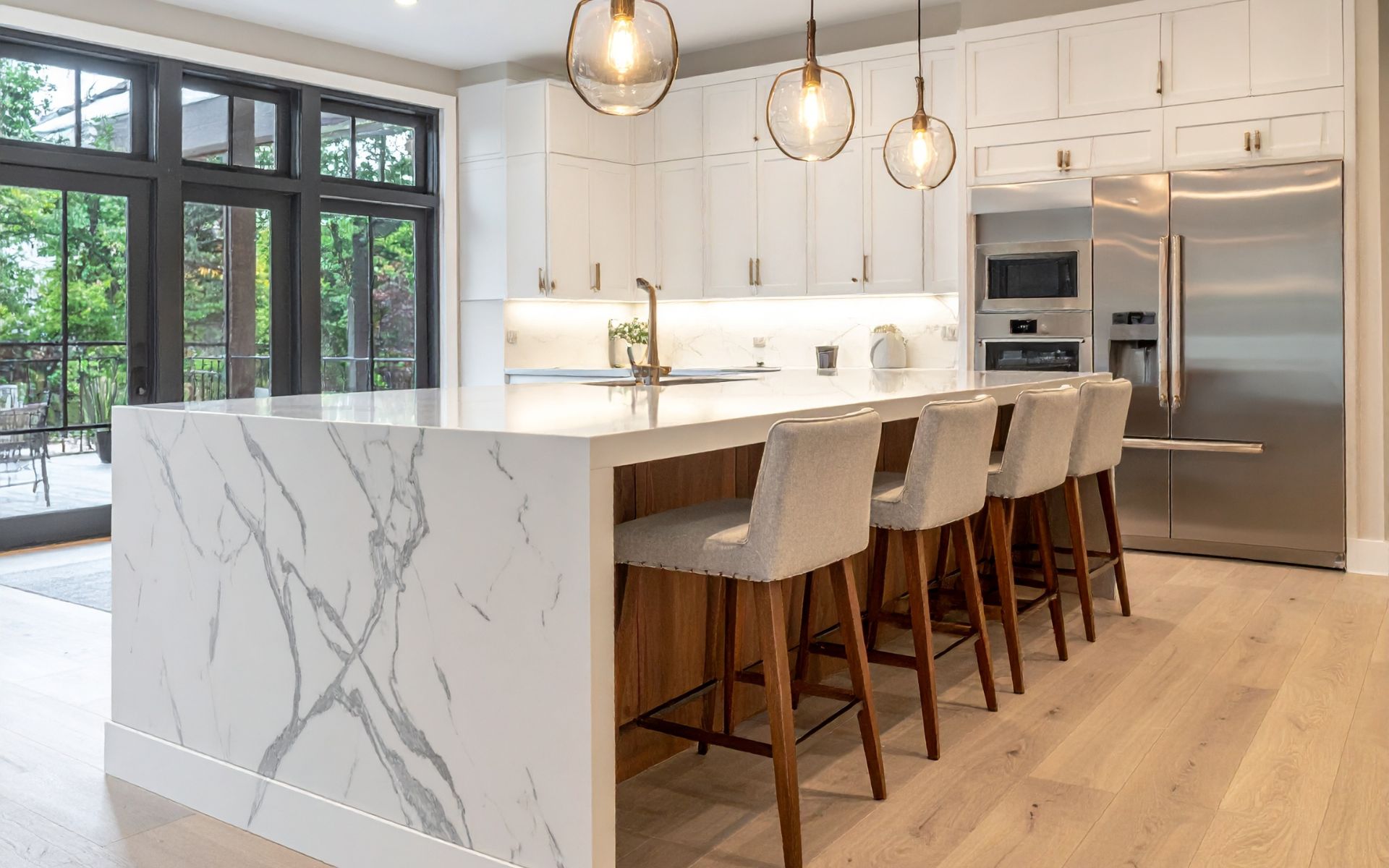
Quartz remains a popular choice for Bothell homeowners because it is durable, low-maintenance, and looks great in a range of kitchen styles. Butcher block is a solid mid-range option with a warm, natural look that works well in both modern and traditional kitchens. Waterfall countertops are a stylish feature that adds to the overall cost and creates a striking focal point in the kitchen.
Cabinetry and Storage Space
Cabinetry is one of the most significant cost components of a kitchen island, and the grade you choose has a major impact on your total budget. Stock cabinets are the most affordable starting point. Semi-custom options sit in the middle and offer more flexibility in sizing and finish. Fully custom cabinets give you complete control but carry a higher price tag. Cabinet costs alone can shift your total budget by $3,000 or more.
Labor Cost to Install Kitchen Island
Labor typically accounts for 25% to 50% of the total project cost. A straightforward prefab install requires minimal labor. A custom build that involves cabinetry, countertops, plumbing, and electrical requires multiple tradespeople and significantly more time on site.

Labor and Additional Installation Costs
For a standard installation, general contractor labor runs roughly $800 to $1,500, depending on complexity. That figure goes up for custom builds or projects that require plumbing and electrical work.
If your kitchen island includes a sink, built-in appliances, or electrical outlets, here is what to add to your budget:
- Plumber: $45 to $200 per hour, depending on experience and local rates
- Electrician: $165 to $535 for most kitchen island wiring projects, including installing where required by local electrical codes
- Permits: $75 to $500, depending on local Bothell regulations and project scope
Permits are required any time plumbing, electrical, or structural work is involved. Your contractor should handle the permit process, but it is worth confirming upfront so there are no surprises.
Cost to Install Kitchen Island with Sink
A kitchen island with a sink is one of the most requested upgrades and is also where costs can jump quickly. Here is a realistic breakdown:
- Sink unit: $250 to $2,000, depending on style and material
- Plumbing installation: $450 to $1,800 to run supply and drain lines
- GFCI outlet near the sink (required by code): $150 to $400
The farther your existing plumbing lines are from the island location, the more labor is involved in running new pipes. If you are working with a kitchen layout where the plumbing is on the opposite end of the room, that is a conversation to have with your contractor before finalizing your budget.
Prefab vs Custom Kitchen Islands
This is one of the first decisions Bothell homeowners face, and it comes down to your budget, your kitchen layout, and how long you plan to stay in the home.
Prefab kitchen islands are ready-made and available at most home improvement stores. They come in standard sizes and finishes, install quickly, and are by far the most affordable option. Prefabricated kitchen islands are typically cheaper to install. If your kitchen has enough space and a straightforward layout and you do not need built-in appliances or plumbing, a prefab island is a practical and cost-effective choice.
Custom-built kitchen islands are designed and built specifically for your space. You choose the dimensions, cabinetry style, countertop material, storage configuration, and any built-in features. The tradeoff is a longer timeline and a higher price point, but the result fits your kitchen exactly and tends to hold up better in resale value.
For Bothell homes with older or non-standard kitchen footprints, custom-built islands are often the more practical long-term investment, even with the higher upfront cost.
Tips to Lower the Cost of Kitchen Island Installation
Wondering how much to add a kitchen island without going over budget? You do not have to stretch your finances to get a great result. These are some of the most effective ways Bothell homeowners keep costs under control without sacrificing quality.
- Choose prefab and handle the install yourself if your island does not require plumbing or electrical. Prefab kitchen islands come with straightforward assembly instructions and are manageable for most homeowners with basic tools and a free weekend.
- Keep utilities where they already are. Designing your kitchen island project around existing plumbing and electrical locations is one of the best ways to avoid unexpected additional costs. Moving a drain line or running new circuits to a different part of the kitchen adds both labor and permit costs.
- Reuse your existing island countertop if it is still in good condition. This reduces the material cost of the kitchen island and cuts down on waste, especially if you are working with a stone surface that still has years of life in it.
- Consider porcelain or butcher block instead of natural stone if you want a clean, quality look at a more manageable price point. Modern porcelain options now closely replicate the look of marble and granite at a significantly lower price point.
- Shop during sales and plan ahead. Home improvement stores in the Bothell and Snohomish County area often run promotions in spring and fall. Ordering materials in advance also protects you from supply delays that can push out your project timeline.

Does a Kitchen Island Increase Home Value?
For most Bothell homeowners, a kitchen island is not just a functional upgrade. It is also a smart financial one.
Kitchen improvements consistently rank among the top home upgrades for return on investment. According to the National Association of Realtors and the National Association of the Remodeling Industry, kitchen upgrades return around 60% of the project cost at resale. For a kitchen island specifically, most estimates put ROI at 60% to 80%, depending on the quality of materials and installation.
In the Bothell and greater Snohomish County real estate market, updated kitchens are one of the features buyers prioritize most. A well-designed island with ample counter space, extra storage, and seating can be the feature that makes your home more appealing to buyers when it comes time to sell.
If you are planning to sell within the next few years, a mid-range kitchen island installation is one of the more financially sound improvements you can make before going to market.
The Bottom Line on Kitchen Island Installation Costs
Every kitchen is different, and so is every budget. The right island for your Bothell home comes down to how you use your kitchen, what features matter most to you, and what you are comfortable spending. Taking the time to plan those details upfront is what separates a smooth project from a stressful one.
When you are ready to move forward, Solid Kitchen & Bath is here to help. From selecting the right kitchen countertop to mapping out the full installation, we make the process straightforward for Bothell homeowners. Contact us today for a free estimate and let us show you what your kitchen is capable of.
FAQs
How much does it cost to install a kitchen island on average?
Most homeowners spend between $4,000 and $8,000 for a mid-range install. A basic prefab island can start under $500, while a fully custom build with plumbing and electrical can reach $15,000 to $20,000 or more depending on materials and scope.
Do I need a permit to install a kitchen island in Bothell?
It depends on what the island involves. A freestanding island with no plumbing or electrical typically does not require a permit. Once you add a sink, outlets, or gas lines, a permit is usually required. Permit costs in Bothell generally range from $75 to $500.
How long does it take to install a kitchen island?
A prefab island with no utility hookups can be done in a day. A custom island involving cabinetry, countertops, plumbing, and electrical typically takes one to two weeks depending on contractor scheduling and material lead times.
Is it cheaper to buy or build a kitchen island?
Buying a prefab island is cheaper upfront, with options starting around $100 to $2,500. Building a custom island costs more but gives you full control over size, storage, and features. For Bothell homes with non-standard layouts, custom is often worth the investment.
What adds the most cost to a kitchen island installation?
Plumbing and electrical work are the biggest cost factors beyond materials. Moving drain lines, running new wiring, or adding gas for a cooktop all require licensed professionals and can add $500 to $2,000 or more to your project.
Can I DIY a kitchen island installation?
For a simple prefab island with no plumbing or electrical, yes. Many Bothell homeowners handle this themselves with basic tools. However, any work involving water lines, electrical circuits, or gas connections should always be handled by a licensed professional.
What countertop material is best for a kitchen island?
It depends on your budget and how you use your kitchen. Butcher block is warm and affordable. Quartz is durable and low-maintenance. Granite offers natural beauty with good durability. Laminate is the most budget-friendly and has improved significantly in appearance over recent years.

.svg%20fill.svg)




.svg)